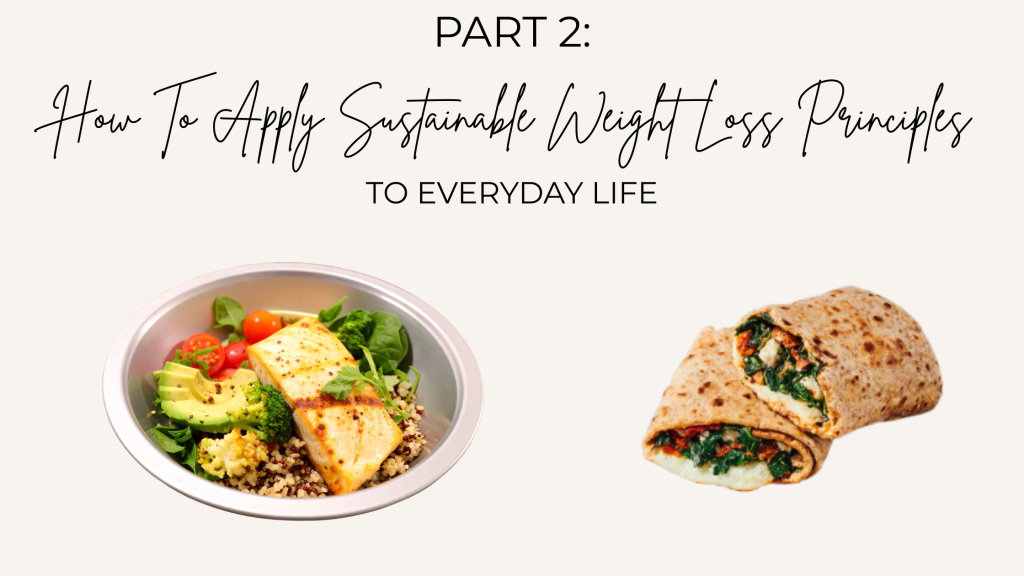
Now that you understand the foundational principles of sustainable weight loss, the real work begins – applying them in everyday life, even on busy days, stressful weeks, and imperfect moments. This is where lasting change is built.
In this second part of the series, we’ll focus on turning these principles into practical routines—how to plan your meals, simplify your food choices, and build habits that support your goals and fit your real life.
How to Meal Plan for Weight Loss Success
If you’re trying to stay consistent with your nutrition, winging it rarely works.
The reality?
Planning is behind most successful weight loss efforts.
But meal planning doesn’t mean spending hours in the kitchen or cooking everything from scratch.
What Meal Planning Actually Looks Like
Meal planning should feel simple and flexible—not overwhelming.
You don’t need:
- Complicated recipes
- Tons of ingredients
- Hours of prep
Use Convenience Foods (They Can Be Healthy!)
Convenience foods can make meal planning easier, faster, and more sustainable.
Here are some go-to options:
- Rotisserie chicken → salads, wraps, bowls, tacos
- Canned fish or meat → sandwiches, crackers, quick meals
- Frozen chicken patties → wraps, salads, grain bowls
- Salad kits → just add protein
- Pre-cut or frozen fruits & vegetables → no prep needed
- Frozen meals (like Kevin’s) → add veggies to round it out
- Microwavable grain pouches → quick whole grain option
- Oatmeal cups → pair with yogurt or eggs for protein
These options help you build balanced meals without the stress.
Prep What You Can (Even a Little Helps)
You don’t need to prep everything—just a few basics can go a long way:
- Grill or cook a protein (like chicken) for the week
- Wash and prep fruit for easy snacks
- Roast potatoes or veggies for quick sides
- Make overnight oats for busy mornings
Even 10–15 minutes of prep can make your week feel easier.
Plan Ahead (It Takes 5 Minutes)
Take a quick look at your week:
- Busy mornings?
- Late evenings?
- Work schedule?
- Kids’ activities or appointments?
This helps you plan meals that actually fit your life.
👉The Bottom Line
When you have a plan—even a simple one, you make more intentional choices, reduce last-minute stress and stay more consistent. And consistency is what drives results.
Simple plan. Smart choices. Real results.
Movement: Train for Strength, Move for Life
Don’t Underestimate Daily Movement (NEAT)
A large portion of your daily calorie burn comes from non-exercise movement, also known as NEAT (Non-Exercise Activity Thermogenesis).
This includes everyday activities like:
- Walking the isles of the grocery store
- Cleaning around the house
- Playing with your kids
- Walking to your coworker’s desk instead of emailing/messaging
These small movements add up – and often contribute more to your daily calorie burn than structured workouts.
They also help:
- Regulate appetite
- Reduce stress
- Support fat loss
👉Here’s a simple place to start: Track your daily steps using a pedometer or smartwatch. You might be surprised how quickly they add up.
The key? Make movement enjoyable.
The more fun it feels, the more consistent you’ll be—and the more naturally your activity increases.
Try:
- Listening to a favorite podcast on an after-dinner walk
- Taking walking meetings
- Dancing while cooking or cleaning
- Trying a new hobby like pickleball
Strength Training Supports Fat Loss and Metabolism
Alongside daily movement, strength training 2–3 times per week is key for:
- Building lean muscle
- Supporting metabolism
- Improving body composition
- Feeling stronger and more confident
Strength training doesn’t have to be complicated.
You can start with:
- Bodyweight exercises
- Dumbbells
- Resistance bands
Consistency matters more than complexity.
Start Simple and Build From There
You don’t need a perfect routine to see results.
👉Start where you are. Build gradually.
Sustainable movement comes from small, repeatable habits that fit your life—not from doing more all at once.
Habits: Build Simple Systems That Work on Busy Days
A habit is simply a behavior repeated often enough that it becomes automatic.
But building habits for weight loss isn’t about more discipline – it’s about making behaviors easier to repeat.
👉 The key is reducing friction.
When a habit feels simple and enjoyable, you’re far more likely to stay consistent.
Why Systems Work Better Than Willpower
Busy women don’t need rigid routines—they need simple systems.
Systems are flexible structures that make healthy choices easier, even on busy or unpredictable days.
When habits are built into your daily routine, they:
- Require less mental energy
- Reduce decision fatigue
- Don’t rely on motivation
And that’s what makes them sustainable.
Focus on Small, Repeatable Actions
The goal isn’t perfection or intensity.
It’s building small, repeatable habits you can come back to again and again.
Simple Systems That Make Healthy Habits Easier
Here are a few “good enough” systems that support consistency:
👉Anchor movement to your day
Park farther away, take walking meetings, or go for a walk during lunch while listening to a podcast
👉Create default meals
Keep 1–2 easy breakfast options on hand (like yogurt, eggs, overnight oats, or fruit) to remove decision-making
👉Design your environment for success
Keep nutrient-dense foods visible and easy to grab, and move less supportive options out of sight
The most effective habits aren’t rigid. They’re flexible, personal, and sustainable.
When your systems make healthy choices easier, consistency starts to feel natural—not forced.
Support Systems Matter: Why Support And Accountability Accelerate Sustainable Weight Loss
Lasting change doesn’t happen in isolation—it happens in an environment that supports you.
Sustainable weight loss is also shaped by:
- The people around you
- The support systems you have in place
When life gets busy or setbacks happen (and they will), support is what keeps you moving forward instead of starting over.
What Accountability Should Feel Like
Accountability isn’t about punishment or being “called out.”
The right kind of accountability feels like:
- Encouragement
- Guidance
- Perspective
It’s someone helping you stay connected to your goals, especially when motivation dips.
Without shame. Without pressure.
How Support Makes Weight Loss Easier
When you have the right support, everything feels more manageable.
Being part of a supportive environment helps you:
- Stay consistent during busy or stressful seasons
- Celebrate progress (even when it’s not perfect)
- Feel less alone in the process
Consistency becomes easier when progress feels supported, not forced.
The Role of Coaching
One of the most impactful things you can do on your weight loss journey? Get the right support.
A coach gives you both a partner in your corner and a clear path forward.
With the right support you’re able to:
- Focus on the habits that actually move the needle
- Stop spinning your wheels
- Follow a clear step-by-step plan
- Adjust your approach when life changes
- Shift your mindset and keep moving forward
It’s not about being perfect. It’s about staying the course.
👉The Bottom Line
You can do this on your own—but it’s much harder than it needs to be.
The right environment makes lasting change feel:
- More possible
- More sustainable
- Far less overwhelming
—————
If any of this resonates, it’s likely because you’re ready for more support than willpower alone. Knowing what to do is important, but having guidance, structure, and accountability is what helps these changes actually stick.
Build sustainable habits with guidance tailored to your life.
Ask questions, get clarity, and decide your next step with confidence.
 Glass Half Full Nutrition
Leave a comment