Most people don’t struggle with healthy eating and weight loss because they lack nutrition knowledge. They struggle because they’re trying to make food decisions when they’re hungry, tired, stressed, and short on time.
That’s where meal planning comes in.
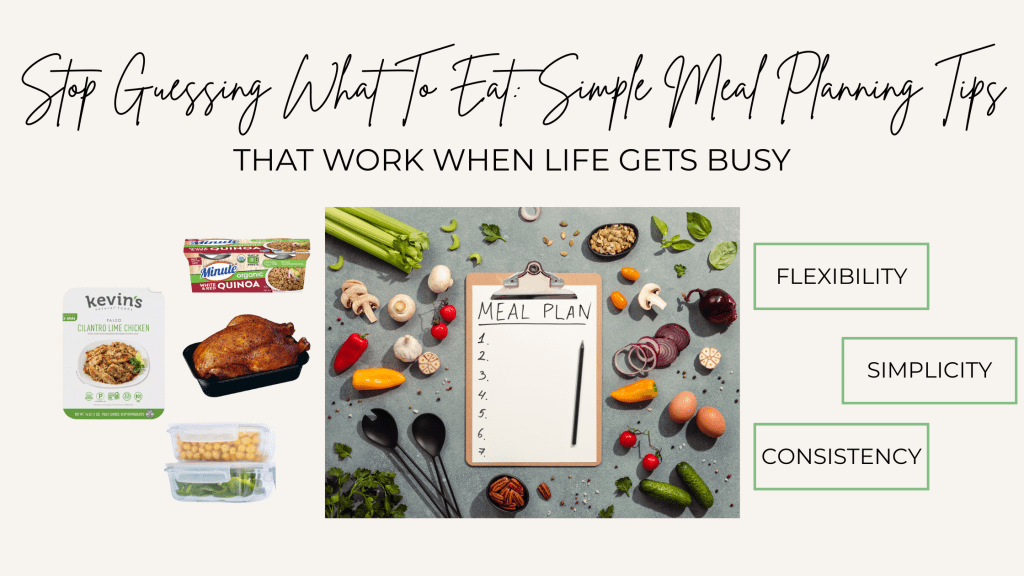
Before you stop reading, know this: meal planning doesn’t mean spending your entire Sunday cooking or eating the same chicken and broccoli for five days straight. It simply means taking a few minutes to think ahead so healthy choices become easier when life gets busy.
👉 And if healthy eating and weight loss are goals of yours, that’s exactly what a good meal plan should do—make the healthy choice the easy choice.
Why Healthy Eating Feels Hard When Life Gets Busy
When life gets busy, healthy eating often gets pushed to the back burner. It’s not because you don’t care—it’s because you’re trying to make food decisions when you’re already juggling a dozen other things.
A few common challenges include:
- Decision fatigue after a long day
- Limited time to cook
- Last-minute schedule changes
- Making food decisions in the moment when you’re already hungry, causing you to grab “whatever sound good”
- Feeling too overwhelmed to figure out what’s for dinner
This is exactly where meal planning can help.
What Meal Planning Is Not
Meal planning does not have to mean:
- Spending hours cooking every meal for the week
- Eating the same thing every day
- Preparing every meal from scratch
- Following a rigid plan no matter what life throws at you
- Constantly searching for new recipes
What Meal Planning Actually Is
Meal planning is a flexible tool that helps make healthy eating easier—not a rigid set of rules you have to follow perfectly.
It simply looks like:
- Looking ahead at your week
- Making a rough plan for meals
- Having ingredients on hand
- Preparing a few foods or meal components ahead of time
- Making healthy eating easier when life gets busy
- Giving your future self a helping hand
One of the biggest misconceptions about meal planning is that there is one “right” way to do it.
There isn’t.
Different weeks require different levels of planning, and your strategy should reflect your schedule, energy, and priorities.
During a busy week, meal planning might mean stocking up on frozen vegetables, rotisserie chicken, bagged salad kits, and other convenience foods.
During a quieter week, it might mean preparing a few meals or meal components ahead of time.
👉 The best meal planning strategy isn’t the most detailed one—it’s the one that fits your schedule and helps make healthy eating easier.
Why This Matters
One of the reasons meal planning can support weight loss is that it makes it easier to build meals around whole, minimally processed foods such as fruits, vegetables, whole grains, and lean proteins.
These foods tend to be more filling and satisfying, helping you naturally manage hunger and portions without feeling deprived. Over time, this can make it easier to create the small calorie deficit needed for fat loss.
That doesn’t mean every food needs to be homemade or unpackaged. Many convenient options, such as canned tuna, frozen vegetables, rotisserie chicken, and microwaveable grain pouches, can absolutely be part of a healthy eating pattern. Rather than focusing on the packaging, focus on the ingredients and how a food fits into your overall routine.
Find the Strategy That Fits Your Week
Busy Week
Some weeks, your goal isn’t to cook more—it’s to make healthy eating as easy as possible.
Consider:
- Leaning on easy protein options like rotisserie chicken, frozen chicken or turkey burgers, canned tuna, or salmon
- Using bagged salad kits as an easy side dish or the foundation of a balanced meal
- Buying pre-cut and frozen vegetables to save time on prep
- Keeping microwaveable grain pouches on hand – 90 seconds away from a high-fiber carbohydrate source
- Stocking up on nutritious convenience foods and frozen meals for nights when cooking isn’t realistic
Convenience foods aren’t “cheating.” They can be valuable tools that help make healthy eating easier during busy seasons of life. Focus less on whether a food is packaged and more on what’s actually in it.
👉 Example: Rotisserie chicken + frozen vegetables + a microwaveable rice pouch = a balanced meal for weight loss in under 10 minutes.
Moderate Week
If you have a little more time, focus on preparing a few meal components rather than full meals.
Consider:
- Cooking a protein, such as browning a few pounds of ground turkey or beef, grilling chicken or boiling a dozen eggs
- Washing and cutting fruit so it’s ready to grab when hunger strikes
- Roasting a sheet pan of vegetables to use throughout the week
- Preparing a healthy carbohydrate such as rice, quinoa or roasted potatoes
- Prepping a few lunch staples, like rotisserie chicken, chopped vegetables or salad ingredients
Think of it as giving your future self a head start. A little prep now can save you time, stress, and food decisions later in the week.
👉 Example: Prepare grilled chicken, chopped vegetables, and roasted potatoes. Mix and match throughout the week to create different meals.
More Time Available
If your schedule allows, this may be a good week to cook a few meals, try a new recipe, or prepare foods that will make future busy weeks easier.
Consider:
- Making a big batch of soup, chili or another family favorite
- Preparing freezer-friendly meals for nights when cooking isn’t realistic
- Trying a new recipe that looks appealing
- Batch cooking proteins or grains to use for future meals
👉 Example: Make a large batch of turkey chili and freeze leftovers for a future busy week.
The goal isn’t to use the same meal planning strategy every week.
👉 The goal is to choose the strategy that best fits your schedule – because that’s the one you’re more likely to stick with.
The Secret to Consistency: Repeat Meals
One of the biggest meal planning mistakes I see is thinking you need to come up with new meals every week.
You don’t.
In fact, most people naturally repeat many of the same meals week after week and month after month. The difference is that successful meal planners recognize this and use it to their advantage.
Over time, you’ll develop a list of go-to breakfasts, lunches, dinners, and snacks that fit your schedule, preferences, and goals. Rather than starting from scratch each week, you can simply rotate through meals you already know and enjoy.
The more decisions you can make once and repeat, the less mental energy you’ll spend figuring out what to eat—and the easier healthy eating becomes.
Make Meal Planning More Enjoyable
If meal planning feels like another chore on your never-ending to-do list, try a strategy called temptation bundling.
Temptation bundling involves pairing something you enjoy with something you want to do more consistently. Research shows this can make habits feel easier and more enjoyable to stick with.
When it’s time to plan meals, grocery shop, or prepare a few foods for the week, try pairing it with something you look forward to, such as:
- Listening to your favorite podcast or audiobook
- Catching up on a TV show
- Playing your favorite playlist
- Enjoying a specialty coffee or tea
- Calling a friend or family member
👉 The goal isn’t to make meal planning perfect—it’s to make it a little more enjoyable and a little easier to follow through on.
The Best Plan Is The One You’ll Use
Healthy eating doesn’t happen by accident. It requires some thought and intentionality.
But that doesn’t mean spending hours cooking, constantly searching for new recipes, or following a rigid plan.
Start small. Look at your week ahead and identify one thing you can do to set yourself up for success. Whether that’s stocking up on convenience foods, preparing a few meal components, or planning a few repeat meals, every bit of preparation can help make healthy eating easier and weight loss within reach.
The best meal planning strategy isn’t the most detailed one—it’s the flexible one that fits your life.
👉 Want one less food decision to make? Download my Protein + Fiber Guide for simple ideas that make balanced meals easier to build.
👉 Ready to simplify your approach and build habits that last?
 Glass Half Full Nutrition
Leave a comment